
In our last post, we covered why Generative Engine Optimization (GEO) is a long game: AI assistants are answering questions directly, zero-click behavior is surging (nearly 60% of searches now end without a click!), and PR is finally pulling its weight in search rankings.
Now the question is: What do you actually do about it?
The job is no longer just “drive every query to our site.” It’s to map where answers are coming from and ensure your brand shows up in those “source-of-truth” nodes. Here is a practical, comms-led strategy to stop yelling into the void and start becoming the answer.
1. Start with Intent, Not Channels
Before you debate “Press Release vs. Blog,” ask: What questions must we answer, and where are those answers living today?
We generally see two big intent patterns:
- “What is the best…?” queries: These lean on social proof. AI cites reviews, forums, and communities like Reddit, Quora, LinkedIn, and G2.
- “What does this company do?” queries: These lean on authority. AI looks for clear corporate sites, “Top Platforms” lists, and high-authority media.
The Play: Don’t just chase the biggest logo. Target the ecosystem the AI trusts for your specific topic. Interestingly, don’t sleep on press releases. Studies show wires and business media frequently appear in AI citations. Treat them as “source-of-truth nodes” rather than just vanity metrics. A boring, well-structured explainer in a trusted mid-tier outlet is often more valuable for GEO than a flashy, hype-heavy interview.
2. Turn Your Content into “Citation Bait”
AI models love structure. They want evidence, not marketing fluff. You need to treat your comms assets—from press releases to executive quotes—as structured evidence.
Format for the Machine:
- Be Answer-First: Lead with a direct 1–3 sentence answer, then follow with context and example.
- Use Q&A Blocks: Literally write “Q: What is [Category]? A: [Definition]” in your releases and product pages. It makes it easy for bots to lift discrete answers.
- Chunk It: Keep sections to 200–300 words with descriptive subheads like “Why this matters for CISOs”. Models don’t read linearly; they scan for specific intents.
Optimize Your Evidence:
- Scope Your Quotes: Avoid generic praise. Use specific structures: “In 2025, [problem] costs [segment] roughly [impact]”.
- Explicit Data: Make sources linkable and clear (“According to [Firm] 2025 report…”) so the AI can verify the stat.
3. Exploit the “Freshness” Gaps
The biggest domains capture a huge share of citations, but they can’t cover everything. This is your opportunity. Models struggle with emerging topics and niche regulatory nuances.
The Play:
- Find the Gap: Use GEO tools or manual testing to see where current AI answers are thin, generic, or outdated.
- Refresh Aggressively: Brands with steady updates outperform sporadic spikes. Review your core “What we do” pages and explainers quarterly.
- Make Freshness Visible: Add “Last updated: [Month Year]” to key assets and pitch “New 2026 data” to show models you are the current authority.
4. Unify Your Team Around an Intent Map
Orchestration is hard because everyone sits in different silos (Web, Comms, Social), but the questions you need to answer and the outcomes are shared across teams.
Instead of assigning responsibility by channel, build a Shared GEO Intent Map:
- Identify the 20–30 questions that matter most to your revenue or risk (e.g., “Is [Brand] good at [use case]?”)
- Audit where you stand today: visible, weak, or nonexistent?
- Assign levers:
- Comms: Secure quotes and data in AI-trusted outlets.
- Content: Write the deep-dive playbooks and “citation bait”
- Web: Handle the schema, FAQs, and site structure
- Social: Seed the answers in Reddit/LinkedIn threads where the AI looks for consensus
You can download our free GEO Intent Map Template here.
5. Quick Wins to Start Now
You can’t capture all the mindshare overnight, but you can start feeding better evidence into the models immediately. Here is your checklist for the next quarter:
- Rewrite Core Pages: Update 2-3 key product pages and your media kit to be “answer-first”.
- Add FAQ Sections: Put Q&A blocks in every new press release and thought leadership piece.
- Run a GEO Campaign: Focus one PR push specifically on outlets that appear in AI citations for your category.
- Start Tracking: Pilot a simple manual review or use a tool to track your visibility on priority questions.
GEO isn’t a new channel; it’s the infrastructure underneath all your channels. By balancing these quick structural wins with a long-term commitment to authority, you ensure that when the world asks about your category, you are the answer.
By Brendon O’Donovan, SVP of Product Solutions and Innovation, PublicRelay
This Shared GEO Intent Map gives communications leaders a clear, unified framework for influencing how audiences, and generative AI systems, perceive their brand.
Instead of working in disconnected channel silos, the GEO Intent Map aligns your comms, content, web, and social teams around the core questions that shape your reputation, revenue, and risk. By identifying the intents that matter most, assessing how visible you are today, and assigning the right levers across teams, you create a coordinated strategy that strengthens your presence across the entire information ecosystem.
Whether you’re building authority in a new category, correcting misperceptions, or ensuring AI models surface accurate answers about your brand, the GEO Intent Map helps you move from fragmented execution to cohesive influence.
Ready to build your own? Download our free Shared GEO Intent Map template here.
The Finance sector held onto its steady and favorable reputation in Q3 2025, supported by restrained communications strategies across most major players, but not all institutions benefited equally. While the industry largely avoided turbulence, some banks became a focal point for legal and regulatory scrutiny, while others stayed out of the spotlight.
In this quarter’s analysis, we explore:
- The strategic advantage of “company voice” in thought leadership (and what happens when it’s dialed back)
- How CEO–Trump meetings are reshaping perceptions of influence across the sector
- Where media appetite is surging and which actions drive the strongest engagement
Get the full breakdown of what’s driving industry narratives and how communications teams can use these insights to lead.
Download the Q3 2025 Finance Benchmark Analysis.
AI has a huge impact on how you and your organization will create content, share information, and reach your stakeholders. In 2022, ChatGPT broke all user growth records by getting 1 million users in just 5 days after launch. Today, ChatGPT alone receives 5.4 billion monthly visits and only 20% of people report not using AI at all, with 35.4% of AI users using the tools daily. And they’re using it not just to generate content or to solve problems; they’re increasingly using it for researching answers to questions and for recommendations.
According to SEMRush, zero-click searches are now used by 80% of users for at least 40% of their searches globally. Additionally, almost 90% of queries that triggered an AI summary are informational. However, a recent study showed that the presence of an AI overview in search resulted in 34.5% lower clickthrough rate (CTR) for the top-ranking pages in those results. Another study from Brightedge confirmed this trend showing that year-over-year, search impressions were up by 49%, but CTRs fell by 30%. Simply stated: If users are now relying on AI summaries, they’re no longer clicking to your website, the earned media you’ve secured, your owned content, or your social content – at least not directly.
It’s not all doom and gloom; with all changes there are winners and losers, but there’s always opportunity.
What is GEO (and why should PR teams care)?
Before we go further, here’s a quick breakdown of the differences in the acronyms you’re likely seeing out there today:
- Generative Engine Optimization (GEO): Ensuring generative AI systems (ChatGPT, Gemini, Perplexity, etc.) reference, summarize, and attribute your brand correctly in answers to user questions.
- Answer Engine Optimization (AEO): Helping engines like Google and Bing surface your content in direct answers and featured snippets — no clicks required.
- AI Optimization (AIO): The umbrella strategy that includes GEO + AEO, along with measurement, data orchestration, and content structuring to protect your brand’s accuracy and authority across AI interfaces.
Together, these represent a shift from ranking in search results pages to being a trusted source in AI-generated answers.
Why PR is More Valuable Than Ever
So, what does that mean for you as a communicator? It means your work is valuable and potentially gaining in value over time. Why? Generative AI favors:
- Neutral, credible content
- Authoritative sources
- Community-validated information
- Fresh, structured context
AI pulls from trusted neutral sources. It avoids overly promotional and paid content. Platforms like Reddit, Linkedin Wikipedia, YouTube, and Medium dominate mentions and citations in LLMs. But go down the list a little further and you start to see media publications, like Forbes and Techradar – and even press release distribution sites. In other words, when you get outside of social and community sites, communications media sources show up frequently in citations. Earned media is finally getting the visibility and weight it deserves.
This probably isn’t news for you, though. GEO is hot right now. And yes — the hype has invited a flood of quick-fix vendors and vague promises. But communicators need real clarity on what actually works — and what needs to change.
This blog is the first in a series that will break down what PR teams must know to influence AI search, track results, and build a future-proof strategy to build credibility and mindshare in AI generated responses (I’ll keep the AI-buzzwords to a minimum to save your sanity — I promise).
How AI Search Actually Works (The simple version)
Traditional search engines match keywords, links, and ranking signals. AI systems do something different:
- They use semantic search (vector search) — finding content based on meaning, not exact phrasing.
- They combine retrieval + generation (RAG) — pulling from multiple sources to construct an answer that is factual and grounded.
- They weigh freshness, expert authority, and completeness more heavily than backlinks or keyword density.
So instead of sending users to the “best link,” generative search synthesizes the most relevant, trustworthy, and current information it can find and references trusted credible sources to base it’s response.
And that’s where PR-driven credibility becomes essential.
Structuring Content for Inclusion:
To be part of the results, though, it’s important that you write and target organic mentions that will match the intent of the query. For communicators like you, this means writing with clarity on what question the audience might ask—and making sure your content answers the intent with clear and organized structures that are technically sound and easy for AI to reference.
To surface in AI-generated answers, your content — and the mentions you earn — must:
- Clearly answer the questions your audience is asking
- Use simple, direct language
- Be structured for easy parsing (headlines, bullets, definitions, FAQs)
- Cite credible sources
- Live on technically sound pages (clean URLs, alt text, metadata, schema)
The goal: make your insights easy to extract and confidently cite.
If your content meets the intent of a user query, generative search can feature your brand — even if you’re not winning traditional SEO rankings.
Community Matters:
In the world of GEO, community content, social signals and organic references still play a role like they did in traditional SEO.
That means community engagement is still a powerful lever: Generative systems still look at source authority, trust and linkage. So, PR-driven mentions and engagement on sites like Reddit, Quora, Instagram, X, and TikTok help. PR teams, like you, can lean into this by building forums, community FAQ content, interviews, podcasts and guest posts that lend credible context and help build your brand as an authority.
Why is GEO a Long Game for PR and Comms?
Simply stated: the signals to AI matter here, and that trust, relevance and credibility can’t be built over night. To win in generative search, PR must:
- Keep content fresh and accurate
- Build consistent authority across sources
- Target citations and mentions that add credibility
- Think beyond one-time press hits and toward accumulated influence
In other words, AI is basically Sting, now: every article you make, every expert quote you place, every trusted source you chase — AI will be watching you (hopefully).
How do you build the strategy and plan for this long game? Our next blog will share some concrete recommendations and strategies to focus your efforts, collaborate with your larger teams, and build toward long term success with some near-term wins.
By Brendon O’Donovan, SVP of Product Solutions and Innovation, PublicRelay
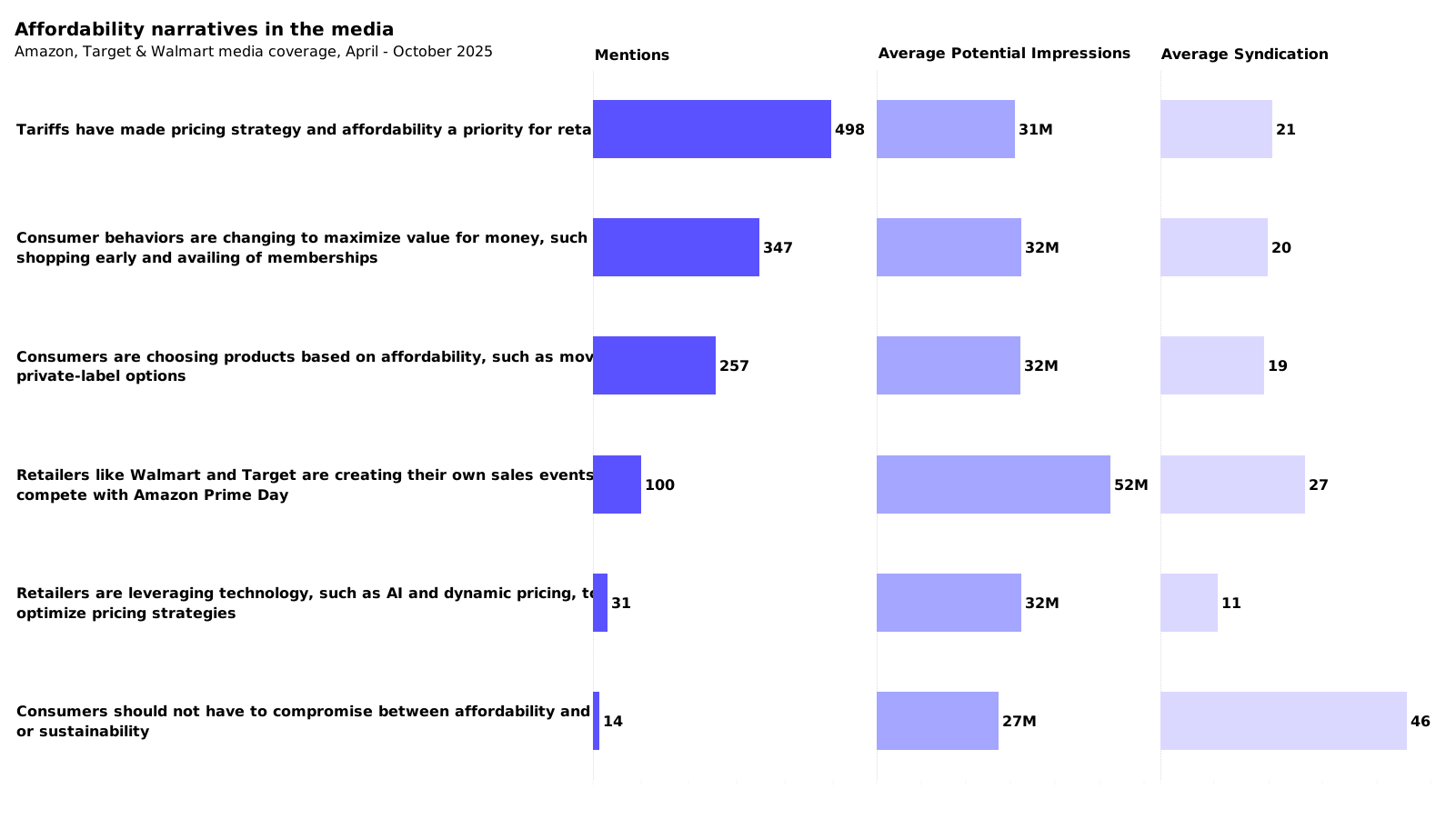
As the holiday shopping season approaches, affordability is once again at the center of retail media coverage. But this year, it’s taking on a different tone. PublicRelay’s analysis of earned media coverage for Amazon, Target, and Walmart from April through October 2025 reveals that affordability is no longer just a pricing story. It’s become a narrative about consumer survival, corporate responsibility, and strategic positioning in a volatile economic climate.
What’s Driving the Conversation: Sales Events, Tariffs, and Shifting Behaviors
Across all three brands, discount and sales events (such as Amazon Prime Day) generated the highest potential reach among affordability-related themes. With 52 million average potential impressions, these events are clearly where media and consumer attention converge.
Meanwhile, narratives about tariffs influencing pricing strategy and consumers seeking more value through memberships and early shopping continue to gain traction. This points to a growing awareness among journalists that affordability is more about the broader economic factors shaping how retailers plan, price, and promote than just about markdowns.
A Subtle but Significant Signal: Affordability and Health
Interestingly, while mentions of “affordability and health” were relatively few, they were the most widely syndicated theme, picked up by 46 outlets on average. This indicates that stories connecting price sensitivity with wellness or sustainability resonate strongly with syndicating publications, amplifying their visibility.
For communicators, this presents both an opportunity and a caution. Consumers and the journalists who influence them are increasingly scrutinizing what “affordable” means. Communicating discounts on healthy, sustainable, or responsibly sourced products will land far better than those tied to disposable or low-quality goods.
What This Means for Black Friday Communications
With consumer fatigue around endless promotions already setting in (CNBC reports “discount burnout”), retailers can’t afford to treat Black Friday like business as usual. Our data suggests this year’s event will be framed less as a celebration of deals and more as a reflection of economic reality. It will be a moment for retailers to demonstrate empathy, transparency, and purpose in how they communicate value.
Communications leaders should prepare for:
- Heightened media scrutiny of pricing tactics amid ongoing tariff impacts (as Retail Brew notes).
- Consumer skepticism toward excessive discounting or “deal fatigue.”
- Greater visibility for messaging that aligns affordability with health, sustainability, and long-term value.
Competing on Principles
Black Friday 2025 isn’t just about competing on price. It’s about competing on principles. Retail communicators who acknowledge the pressures consumers face, highlight the value behind their discounts, and position affordability as part of a responsible brand promise will be best positioned to win trust and strengthen reputation this season.
By Kay Kavanagh, Director of Research, PublicRelay
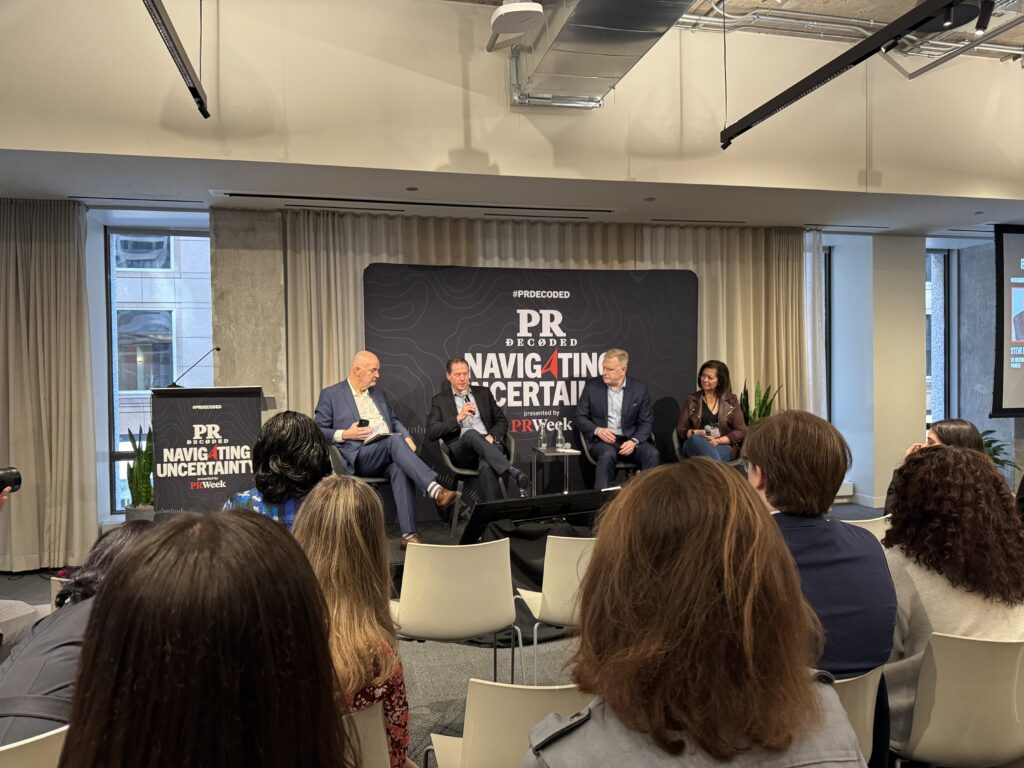
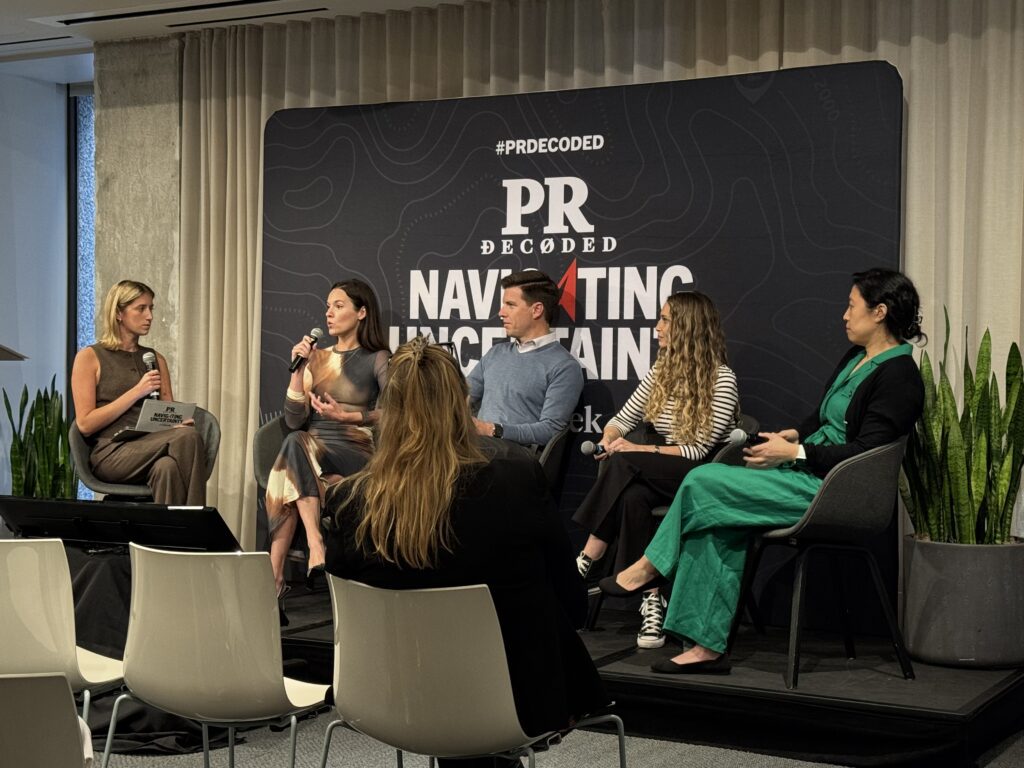
The PRDecoded 2025 conference in Chicago brought together the industry’s sharpest minds to explore one urgent theme: how communicators can navigate uncertainty in an era of accelerating change.
Below is a summary of the sessions I attended and a breakdown of the messages I subsequently took away from the event.
Across sessions led by agency leaders, brand executives, and researchers, I found one message expressly clear: the rules are being rewritten, and PR is better positioned than ever to lead.
1. PR’s Defining Moment Has Arrived
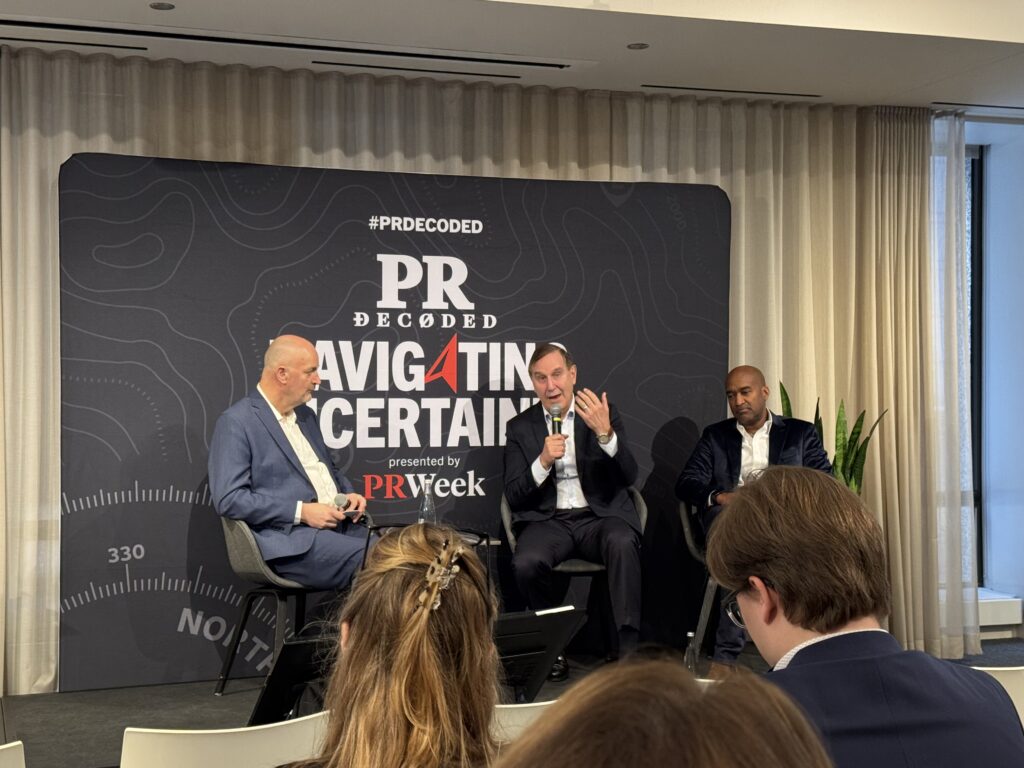
The opening “State of the PR Nation” conversation between Richard Edelman of Edelman and Chris Foster of Omnicom PR Group set an assertive tone.
Edelman made an impassioned call for communicators to seize what he called “PR’smoment”. By which he was saying the rise of earned influence in AI-driven search. With Large Language Models (LLMs) pulling heavily from earned and organic media, PR has a measurable impact on reputation and revenue. Reputation driven from earned media is now the lead.
Foster echoed this sentiment, emphasizing that communicators must understand business fundamentals as deeply as they understand storytelling. “We own the story, and the story is the strategy,” he said, urging PR pros to lean into technology, not fear it.
Both agreed: this is not a time for timidity. It’s a time for PR to demonstrate its elasticity, its fluency in technology, and its ability to connect earned narratives directly to business outcomes.
2. Rebuilding Trust in a Skeptical World
In a panel on: Building Brand Trust in an Era of Skepticism, leaders from Feeding America, Conagra, and Allison shared a stark reality: trust is the most valuable — and fragile — currency brands hold.
Monica McCafferty of Feeding America argued that rebuilding it starts with authenticity. Conagra’s Jon Harris underscored the need to earn and sustain stakeholder trust consistently, noting that in an age of transparency, words alone no longer suffice.
The takeaway? As optimism fades in Western democracies, communicators must play a central role in restoring belief not through messaging spin, but through actions that align with brand purpose.
3. AI Is Reshaping the Communications Ecosystem
Several sessions reinforced that artificial intelligence is the next evolution of our craft, not the enemy
From Glenn Frates of PR Newswire calling for “information releases” structured to serve both human and machine readers, to Eileen O’Neill of Culligan reminding brands to “use data in smart ways,” the core message seemed to be: AI changes not what we say, but how we deliver and contextualize it.
Perhaps most eye-opening was Rob Bernstein of Ketchum’s presentation on Harnessing the Power of Search in the Era of Generative AI. He highlighted that GenAI represents the fastest technology adoption in history — 100 million users in two months — and it’s already redefining discovery.
In this “no-click search” world, GenAI doesn’t send people to your website; it becomes your website. Bernstein called it “the most powerful influencer of reputation,” urging communicators to analyze which stories are feeding algorithms and to optimize for visibility and sentiment.
His advice: Analyze → Interpret → Optimize. Because if you don’t answer questions about your brand, AI will, though you might not like the results.
4. Data Is the New Language of Reputation
In the Guardians of Reputation session, ADM’s Brett Lutz and Carma’s Orla Graham discussed how data is reframing reputation management.
Younger audiences, Graham noted, are deeply influenced by brand values. According to her, they don’t just buy products; they buy alignment. Lutz shared how ADM’s communications team uses data to make rapid strategic pivots, from reacting to political comments affecting corn prices to tracking how GenAI portrays their brand in search.
Similarly, in the session Reputation Is Currency, speakers described how their teams are investing in analytics and predictive modeling to quantify the business impact of communications,, underscoring how insights infrastructure now directly supports C-suite decision-making.
5. The Evolving Role of the CEO as Chief Communicator
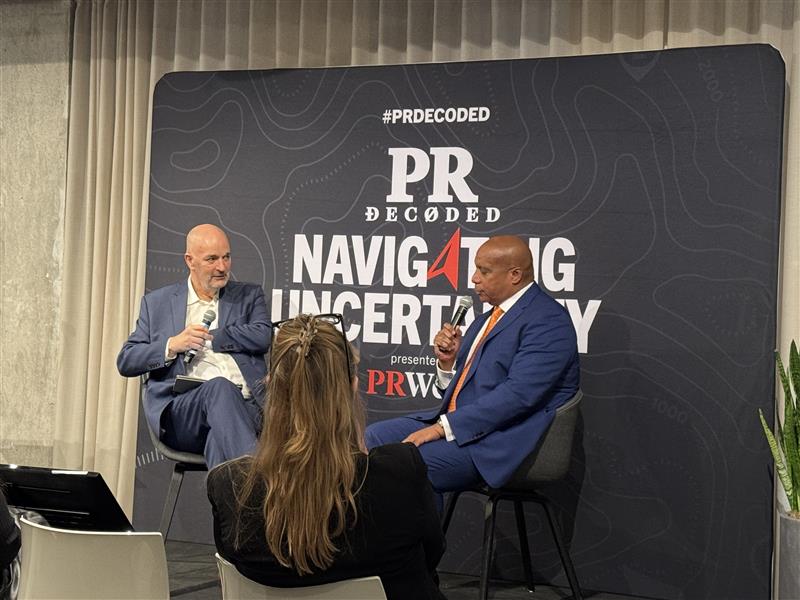
The CEO as Lead Communicator panel and Kevin Warren’s keynote, Leadership and Aiming High, underscored the modern CEO’s role as a communicator first, operator second.
Warren, President & CEO of the Chicago Bears, shared how his decision-making philosophy, “player safety first” during the Big Ten’s pandemic-era challenges, stemmed from values-based clarity. Similarly, Monosol’s leaders spoke about agility and proactive signal detection as key to navigating crises like the “Tide Pod Challenge.”
The throughline: CEOs must not only embody transparency but also rely on communications teams who can sense emerging risks before they surface.
6. Strategic Responsiveness Is the New Crisis Playbook
In Cultural Flashpoints and the C-Suite, BMO’s Laura Micheli and Northwestern’s Jonathan Copulsky reframed crisis management as an ongoing cycle of intelligence and adaptation.
Copulsky drew parallels between brand resilience and military counterinsurgency strategy, emphasizing prediction, learning, and iteration rather than one-off crisis containment. Micheli shared how BMO’s culturally attuned campaigns, like #LoudBudgeting, turned potential financial anxiety into empowerment and relatability.
In summary: agility and foresight are foundational.
7. Influencers and Audiences Are Co-Creators of Trust
Finally, the Influencer Marketing Is the New Media session challenged the traditional view of influence.
GM’s Jessica Carmona and Burson’s Vikki Chowney argued that today’s most powerful influencers aren’t always celebrities.They’re the people who understand content and audience psychology. Chowney emphasized the importance of shared values and co-creation, while Reddit’s Adam Seligson noted that each platform requires a tailored, value-driven approach.
Basically, audiences can tell when brands “show up” authentically and they reward it.
PR Must Lead Through Change
PRDecoded 2025 made one thing clear: uncertainty is not the enemy, but complacency sure is.
Communicators are the guardians of reputation, the architects of narrative truth, and now, the stewards of how AI perceives our brands. The future belongs to those who blend creativity with data, courage with curiosity, and empathy with precision, and as partners to communicators, we’re ready to help.
This is PR’s moment to lead — not by reacting to the world’s uncertainty, but by shaping what comes next.
By Jim Key, VP of Enterprise Solutions, PublicRelay
Halloween is approaching, and for communications leaders, the things that go bump in the night aren’t ghosts or goblins. No, what more often fills them with dread are headlines that spiral out of control, AI-written narratives that sound just a little too synthetic, and executive teams that want impact yesterday.
Over the past two months, PublicRelay has hosted roundtable discussions with senior communications leaders across industries. The conversations revealed that while comms professionals may sleep with one eye open, they’re also sharper, more strategic, and more indispensable than ever.
Here’s what’s keeping them up at night.
1. The Nightmare of Reputation Risk
“Reputation protection is the new risk management,” one participant shared. Nearly every conversation returned to this theme and the sense that reputation is no longer an abstract concept but a quantifiable business asset.
For many leaders, the line between crisis and credibility is razor-thin. The news cycle moves at a breakneck pace, and so does misinformation. Whether it’s a data breach, a leadership change, or a public policy issue, the first few hours matter most, with the communications function most often standing as the first line of defense.
Reputation may never sleep. Neither, it seems, do the teams protecting it.
2. The AI Apparition: Trust in the Age of Machines
If there was a clear chill in the air during these discussions, it came from one word: AI.
While many leaders acknowledged its efficiency, several worried about what one called “computers talking to computers”, a process that risks eroding human trust. Others discussed how their organizations are exploring Generative Engine Optimization (GEO) (optimizing for AI-generated summaries and responses) but admitted it’s a landscape currently defined by panic and uncertainty.
One communicator summed it up perfectly: “We’re trying to figure out how to differentiate our human insights from what AI can do. That’s our edge.”
The consensus? AI isn’t replacing the communicator, but it’s forcing a redefinition of what credible, human-centered communication looks like.
3. The Shapeshifting Media Landscape
The days when traditional media was the only game in town are long gone. Yet, many executives still crave that front-page Wall Street Journal coverage. Communications leaders have been juggling a three-headed monster: earned, owned, and paid media, trying desperately to make them play nicely together.
Podcasts and video content have emerged as rising stars, offering direct access to niche audiences. But as one leader shared, “Our first podcast sounded like we were talking to ourselves. We had to learn how to make it a conversation.”
Another leader described a cyber incident where the comms team took control of the narrative by first publishing a transparent internal memo, then a technical blog, and finally an external statement. The approach turned a potential crisis into a case study in responsible crisis mitigation.
The moral of the story is that those who control their own channels hold the flashlight in the dark, cobweb-filled hallways of ‘media’.
4. The Friction Between Functions
For many, the most unsettling shift is internal. Comms teams are increasingly merging with marketing, HR, and even legal. That’s created both collaboration and confusion.
Some noted a trend of Chief Communications Officers reporting into HR. This is a move that sparked anxiety about the perceived value of communications within the organization. “It depends on the CEO,” one leader said. “But no matter where you sit, you have to prove your impact.”
Measurement, once a “nice-to-have,” has become the silver bullet. Teams are tracking not just sentiment and awareness, but how their work drives trust, engagement, and retention, because these are metrics executives can actually take to the boardroom.
5. The Emotional Toll of Leading Through Uncertainty
Communicators are the steady hands in times of chaos, but they’re human, too.
In crisis moments, leaders described relying on “mindfulness” as their anchor. “It starts with a deep breath,” one said. “How we respond impacts how everyone else responds.”
Others spoke of balancing empathy with authority and being vulnerable enough to say ‘I don’t know,’ while confident enough to guide others through ambiguity.
One leader shared a team motto that’s apt for the profession: “Swim like a duck: calm on the surface, paddling furiously below.”
The Final Fright (and Hope): Community
For all the anxieties, there was a shared sense of relief in hearing “you’re not alone.”
Communications leaders today are navigating more volatility than ever, but they’re also finding strength in collaboration with peers, with data, and with their own sense of purpose.
So, what’s keeping communications leaders up at night?
The same thing that keeps them motivated each morning: the knowledge that their words, choices, and instincts shape the reputation of the organizations they serve.
Join one of PublicRelay’s upcoming events to find your own community moment.
By Alyson Atwell, Director of Marketing, PublicRelay
For years, the gold standard of media relations has revolved around securing placements in top-tier outlets – the New York Times, Washington Post, Wall Street Journal, and their esteemed peers. The logic was sound: these publications offered unparalleled reach, credibility, and influence. And, all things equal, traditional search ranking was boosted most by the bigger publications. But what if the ground beneath that strategy is shifting thanks to the rise of AI and a little-understood factor of Gen AI Engine Optimization (GEO) strategy?
We’re seeing compelling evidence that the influence of these traditional titans, while still significant, is no longer the sole determinant of success. The media landscape is fragmenting, and a new power player has entered the arena: AI.
The Hidden Influence of Smaller Publications
AI models like ChatGPT, Gemini, Claude, Perplexity, and others don’t just skim headlines when they consume information; they ingest, analyze, and synthesize the full text of sources the model recognizes as authoritative and credible, especially news sources. And herein lies the critical distinction: for many of these powerful AI engines, full text access to premium, paywalled publications like the NYT, WaPo, or WSJ is often limited or non-existent.
This creates a fascinating dynamic. While your hard-earned placement in a major daily might still generate buzz within human circles, its impact on what an AI model considers authoritative or relevant could be surprisingly muted. Conversely, trade publications, industry blogs, and even smaller, regional outlets – often with more open access policies – are being devoured whole by these AI platforms.
Adding a layer of complexity to this framework is that the search engines, publishers, and content producers are entangled in a web of legal gray area, with each protecting its own interests. Axios recently reported on the intricate web of licensing deals and lawsuits in this space, while Cloudflare is rolling out a pay-per-crawl tool to enhance content protections and make it harder (i.e. more expensive) for AI models to consume that content. In other words, the sources AI models access are a constantly moving target.
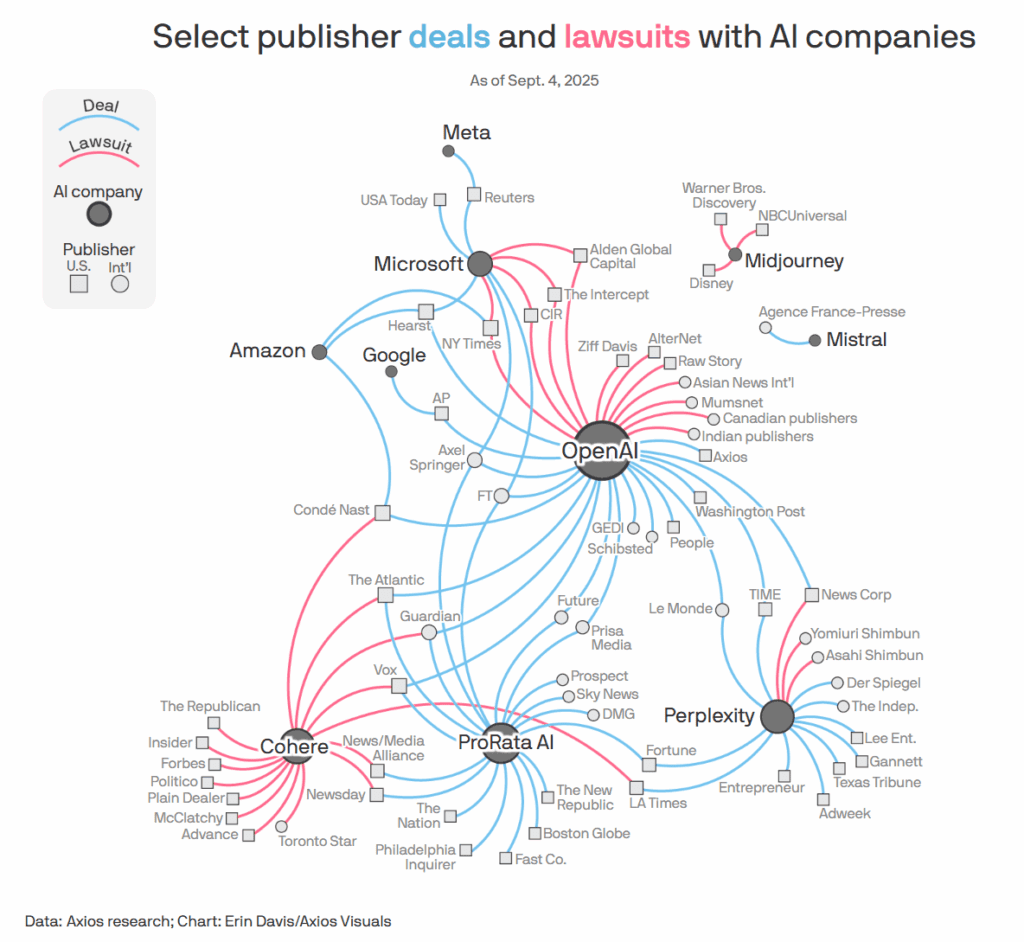
What this all means for Comms teams is that when a user queries Generative AI or even Google for information related to your industry, brand, products, services, leadership, etc. the answers they receive are increasingly being shaped by the outlets these AI models can fully read and process. If your key messages are locked behind paywalls, they’re essentially invisible to this growing and incredibly influential segment of information consumption.
The GEO Strategy: More Than Just Keywords
Beyond content access, there’s another subtle but powerful force at play: GEO strategy. This refers to the geographic and local optimization that AI engines are increasingly employing. For certain types of queries, particularly those with a local or specialized bent, an AI might prioritize content from sources geographically closer to the user or those with a demonstrated focus on niche topics.
This further reinforces the idea that a blanket “top-tier only” approach is becoming outdated. A highly relevant, well-researched article in a respected trade publication, even if it has a smaller traditional readership, could hold more weight with an AI than a broad-stroke piece in a national daily that isn’t as specifically tailored to the AI’s contextual understanding.
Time to Rethink: Prioritizing the Trades and Niche Outlets
So, what does this mean for your media strategy? It’s not about abandoning top-tier media entirely, but rather about recalibrating your priorities and expanding your focus. Your new top-tier should include:
- Key Trade Publications: These are often the authoritative voice within your specific industry, and critically, many have more open access policies for AI.
- Industry Blogs and Online Communities: Where your stakeholders are actively engaging and discussing relevant topics.
- Specialized Newsletters and Research Platforms: Often overlooked, but highly valued by specific, influential audiences.
The Challenge: How to Identify the Outlets that Actually Move the Needle?
At PublicRelay, our philosophy is rooted in using quality data from varied and trusted sources to answer these and other tough questions Communicators face.
Our robust outlet analysis approach goes far beyond traditional metrics like circulation to map out the best outlets and journalists to prioritize, given your specific business goals.
We combine:
- Psychographic and Demographic Data to pinpoint precisely which stakeholders value which outlets and why, so you can customize messaging accordingly;
- Sharing Data to evaluate how content from different sources truly resonates and spreads;
- Accurate Sentiment and Topic Analysis to ensure your messaging is landing effectively and driving the right conversations; and
- GEO Analysis to surface those secondary outlets that ChatGPT and others prioritize, so your messaging breaks through in search responses.
This holistic approach enables us to deliver truly targeted media lists that propel all of your goals: reaching your stakeholders where they are with the right messaging, including ensuring your voice is heard and understood in the increasingly influential AI engine results.
Don’t let an outdated media strategy leave you behind in the age of AI. Let PublicRelay help you craft a forward-thinking, data-driven plan that ensures your messages are not just seen but truly absorbed by both human and artificial intelligence.
Author: Liz Hogan, Senior Sales Engineer
Media coverage of CEOs has become an important proxy for corporate reputation. Leaders are no longer just operators of their businesses; they are increasingly seen as brands themselves. PublicRelay’s 2025 edition of our CEO Index illustrates how executives are perceived in the media and, more importantly, how their presence affects their companies’ reputations.
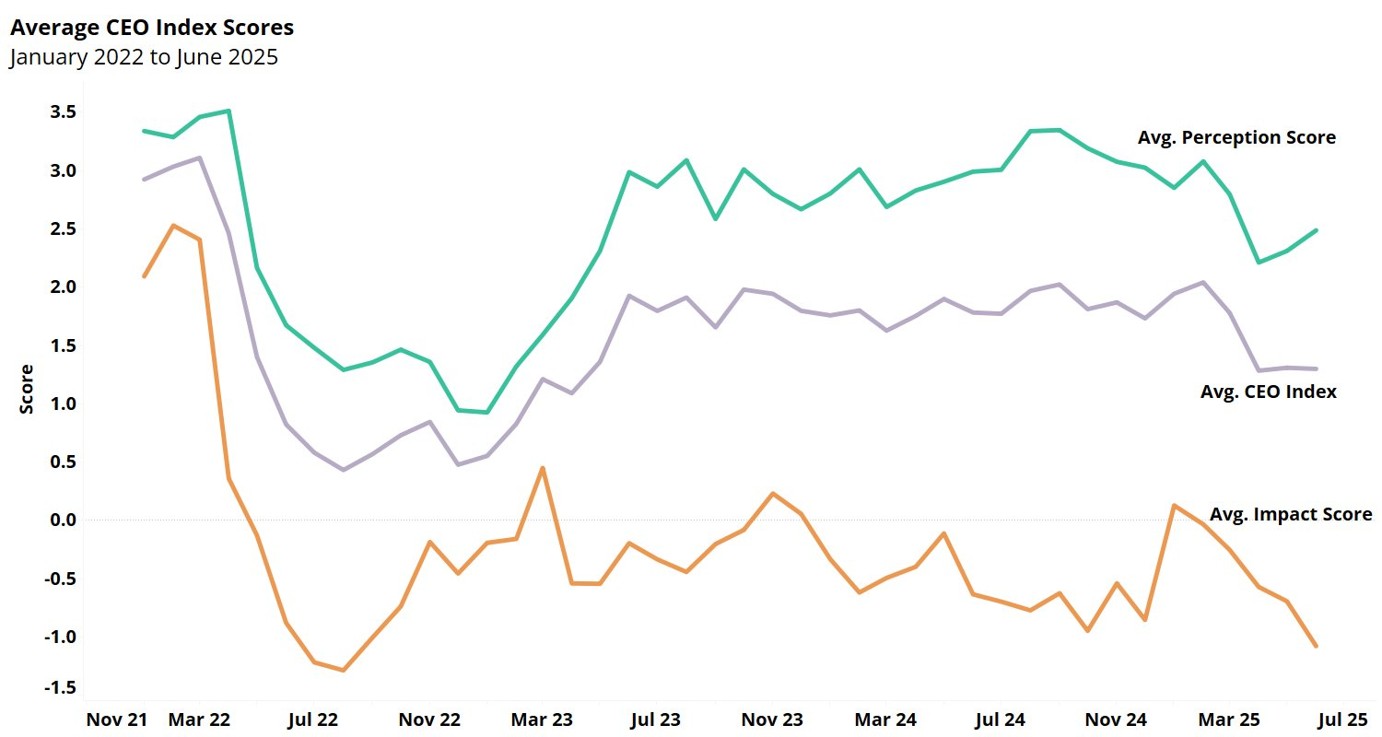
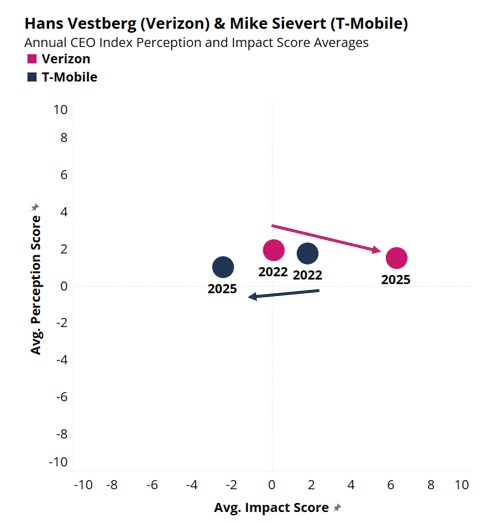
The Index combines both perception and impact into a composite score. Perception reflects how the CEO is covered in the media (tone, reach, and visibility) while impact measures how that same coverage translates into reputation outcomes for the company. A consistent theme in the data is the widening gap between perception and impact. Many CEOs are highly visible and even well-liked, but their companies do not see a corresponding reputational benefit.
Visibility’s Double-Edged Sword
In the period leading up to Trump’s second term, CEO Perception and Impact Scores experienced a spike, as many high-profile executives sought visibility by engaging with Trump and his administration. At the time, this media-friendly approach—being seen at Mar-a-Lago or in high-profile meetings—was widely viewed as doing what was necessary for their companies, sometimes drawing even positive press coverage despite political differences. However, this honeymoon period proved short-lived. As Trump’s policies on tariffs began to impact businesses and tech leaders became embroiled in public controversies, such as Elon Musk’s erratic influence on Tesla’s narrative, the mood quickly shifted and scores dropped again. While visibility initially boosted CEO standing in the media, it soon backfired as those same meetings and donations led to sustained negative coverage. In other words, just “being visible” and courting influence is not a reliable long-term strategy.
This is where executive communications plays a critical role. For a CEO’s presence to have a positive effect on a corporate brand, it has to be carefully connected to the company’s enduring strategic narrative—otherwise, fleeting publicity can do more harm than good.
Archetypes That Reward Substance
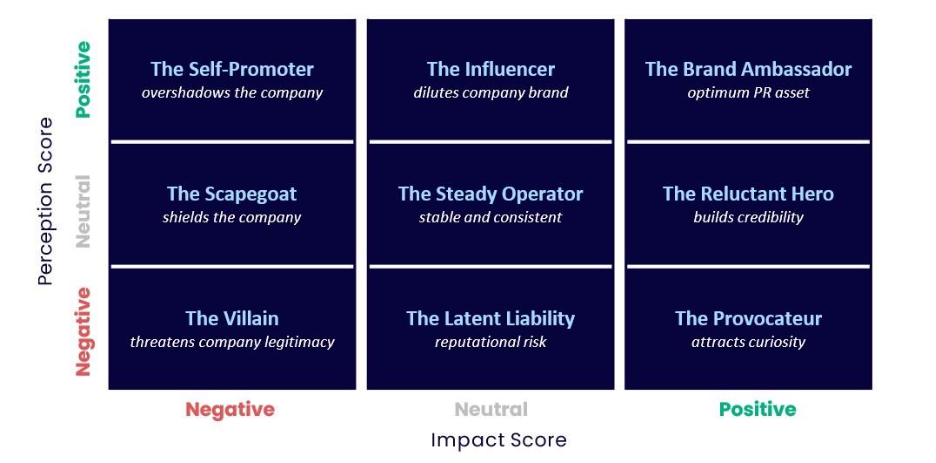
The Index identifies nine CEO archetypes depending on certain combinations of Perception and Impact. These archetypes range from the well-aligned “Brand Ambassador” to the reputationally risky “Villain.” Two of the less flashy archetypes are particularly noteworthy:
- The Reluctant Hero: A leader who rarely seeks the spotlight but, when covered, emphasizes the company’s achievements and values. Their modest, authentic approach builds credibility and often improves the company’s reputation more than constant visibility would.
- The Steady Operator: A leader who communicates consistently and factually, without spectacle. This archetype may not drive headlines, but they project competence and stability, which are essential qualities when markets are volatile.
Both types represent CEOs who may not dominate media narratives but nonetheless contribute meaningfully to their company’s reputation by either positively impacting it, or at the very least, by not causing controversy.
Case Studies of Quiet Effectiveness
Recent case studies illustrate how understated leadership can deliver strong impact:
- Verizon’s Hans Vestberg has steadily climbed the rankings by embodying the Reluctant Hero archetype. Rather than chasing headlines, he has highlighted Verizon’s AI-powered service improvements and cybersecurity investments. Coverage of these efforts portrays the company as competent and forward-looking, reinforcing stability in a sector where trust in technology is critical. While Vestberg’s average Perception Score has seen a slight decrease since 2022, his Impact Score has jumped.
- In the finance sector, several CEOs have successfully shifted archetypes by dialing back personal visibility and focusing on results. Goldman Sachs’ David Solomon, once criticized for his DJ side-gig and off-beat return-to-office comments, retreated from that persona and returned to a more traditional leadership profile. Solomon’s quieter public profile signaled a retreat from Villain territory toward a more stable archetype.
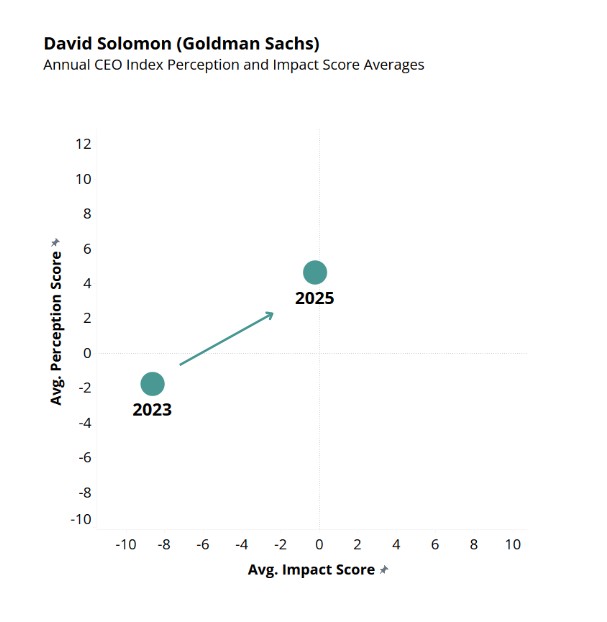
These examples demonstrate that quiet effectiveness is not about avoiding the media altogether, but about ensuring that media coverage consistently reinforces the company’s narrative rather than overshadowing it.
Why Quiet Can Be Effective
Some CEOs score higher on impact than perception. They are not household names like Elon Musk or Mark Zuckerberg, nor do they command constant media attention. Instead, they focus their communication on company performance, innovation, and stakeholder value. Their impact scores suggest that measured visibility, tied directly to the brand’s story, can be just as valuable as charisma or controversy.
This matters at a time when CEOs are under intense pressure to serve as steadying figures. The public looks to them for signals of stability in the face of economic and geopolitical challenges. For executive communications teams, the task is to align messaging with that need, ensuring that even modest media appearances reinforce the company’s strengths and resilience.
Implications for Executive Communicators
The data suggests that visibility alone is no longer a reliable strategy. Executive communications teams should consider:
- Evaluating the CEO’s current archetype and its alignment with company reputation goals.
- Building strategies for high-impact, low-frequency engagements, especially when the CEO naturally fits the Reluctant Hero or Steady Operator mold.
- Monitoring both perception and impact scores over time to identify when a CEO’s presence may be overshadowing or misaligned with the corporate narrative.
- Studying sector-specific examples, such as finance and telecom CEOs, who have shifted archetypes by recalibrating their communications strategies.
Conclusion
Not every CEO will become a larger-than-life media figure, and that can often be for the best. The 2025 CEO Archetypes Index shows that quiet effectiveness can be just as valuable, if not more so, for companies seeking stability and trust. Executive communicators who recognize and support this kind of leadership can help ensure that a CEO’s media presence, however modest, delivers meaningful impact for the brand.
Download the full 2025 CEO Archetypes Report to explore all nine archetypes and learn how they shape both perception and impact.
Author: Kay Kavanagh, Director of Research